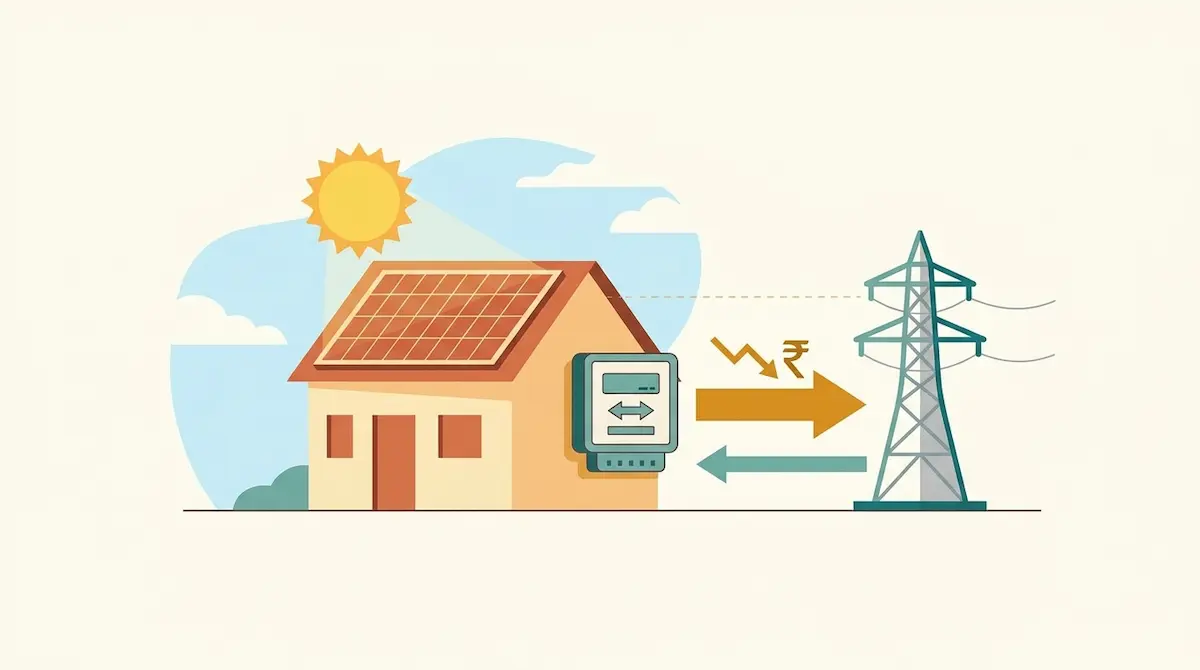
Your June MEPCO bill carries two opposite changes at once. NEPRA approved a quarterly tariff cut, and on the same statement it added a fuel charge for April. Both land on the June bill, so the relief you actually feel is smaller than the Rs1.99 figure doing the rounds. Here is exactly what moved, by how much, and what it means for a typical Multan household.
What NEPRA changed for June 2026
The National Electric Power Regulatory Authority (NEPRA) issued two separate decisions:
- A negative Quarterly Tariff Adjustment (QTA) of Rs1.99 per unit (precisely Rs1.9857) for the January–March 2026 period. This relief applies to bills for June, July and August 2026 and is worth roughly Rs67 billion to consumers nationwide.
- A positive Fuel Cost Adjustment (FCA) of Rs1.19 per unit (Rs1.1907) for electricity consumed in April 2026. Distribution companies, including the Multan Electric Power Company (MEPCO), reflect this in the June billing month.
The QTA returns money where power-sector costs — capacity charges, transmission charges and the market operator fee — came in lower than projected. The FCA does the reverse: it recovers the gap between the reference fuel cost and what generation actually cost in April.
The net effect on your June bill
Because both adjustments hit the same statement, they partly cancel out. Subtract the Rs1.19 fuel charge from the Rs1.99 cut, and June consumers see a net reduction of about Re0.80 per unit. NEPRA scaled the fuel charge down from the Rs1.73 per unit that the CPPA-G had requested, which protected most of the relief.
After June, the FCA portion drops away. The Rs1.99 QTA reduction stays in place through July and August, so those two months should feel lighter than June — assuming no fresh monthly fuel charge replaces it.
What it means for a typical Multan household
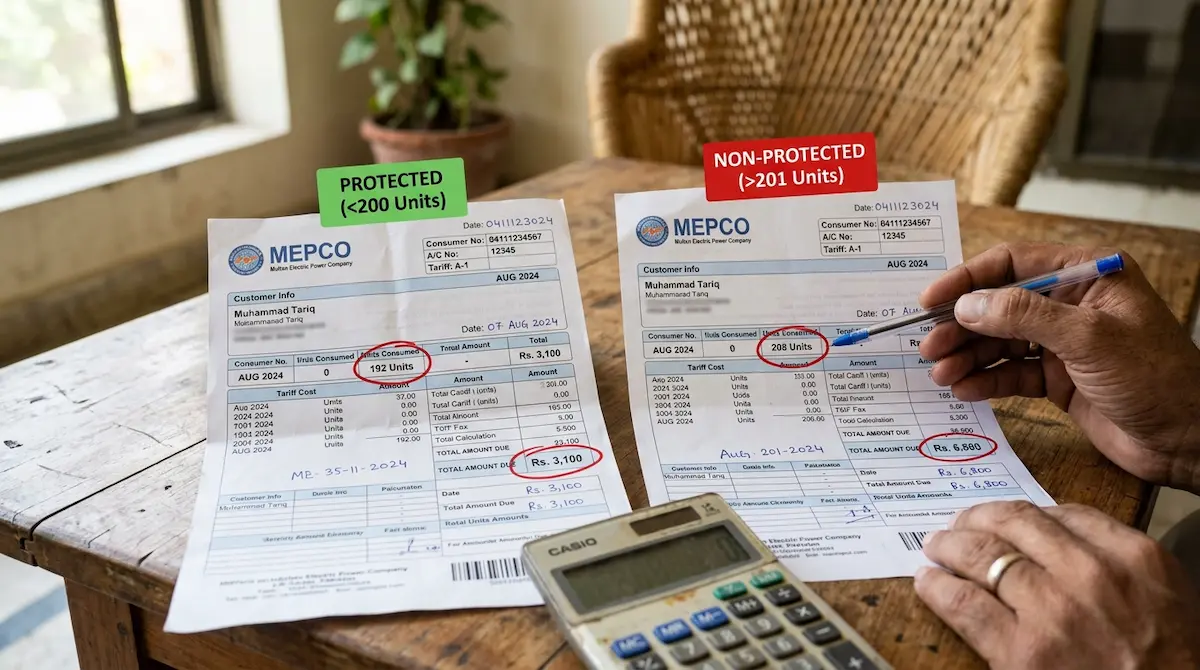
Take a domestic, non-protected connection using 350 units in June. The net 80-paisa cut applies to each billed unit, so the QTA-versus-FCA shift trims roughly Rs280 from that bill before tax — not dramatic, but real money during peak summer load.
A few specifics that matter for South Punjab consumers:
- Lifeline consumers (50 units or fewer a month) are excluded from the FCA and from the QTA structure.
- Electric vehicle charging stations and prepaid consumers on the prepaid tariff are also exempt from the April FCA.
- The adjustment is per unit, so the more you consume in summer, the larger both the cut and the charge feel in rupee terms.
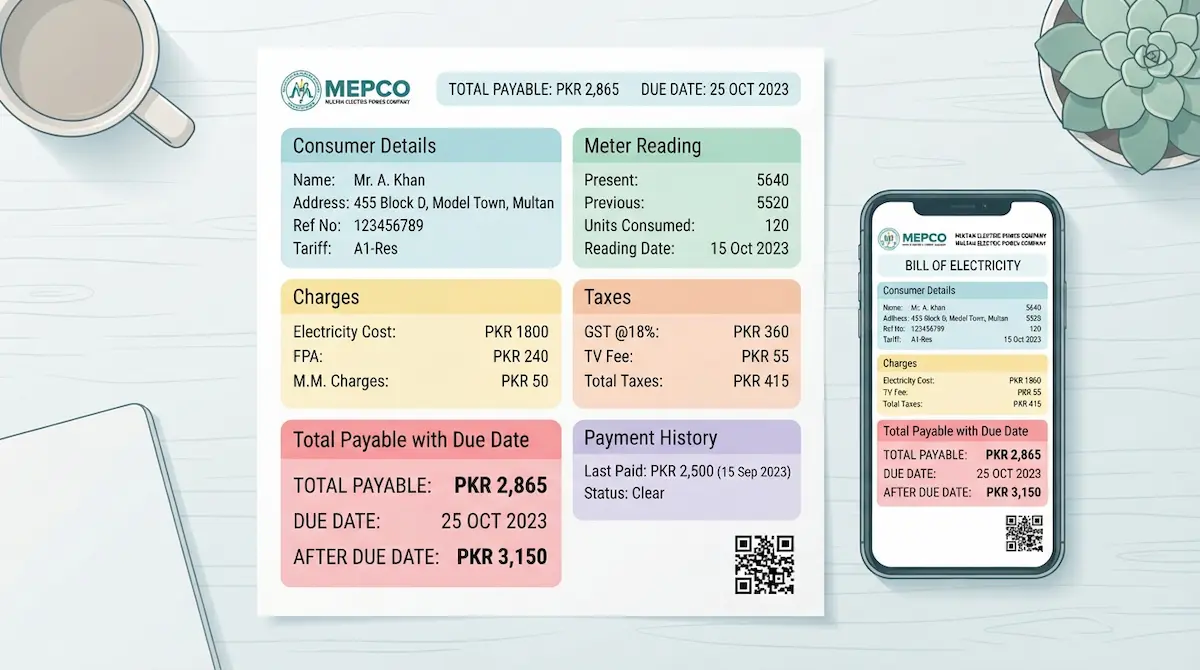
If your June statement still looks higher than May despite this relief, summer consumption is the usual reason. Air-conditioning load pushes many homes into a higher tariff slab, and that slab jump easily outweighs an 80-paisa per-unit cut. You can confirm your exact units and read the charges line by line when you check your MEPCO bill online with your 14-digit reference number.
Why fuel costs spiked in April
The April fuel charge traces back to a real supply shock. Regional tension linked to the Iran–US conflict disrupted RLNG cargoes, and Brent crude climbed from around $70 to as high as $120 a barrel. Under normal fuel pass-through rules, that pressure could have added Rs5 to Rs6 per unit. Roughly two hours of daily load management, early market closures, extra indigenous gas and limited furnace-oil use held the final FCA to Rs1.19.
The bottom line for June
For June 2026, MEPCO consumers get a modest net cut of about Re0.80 per unit — a Rs1.99 quarterly reduction minus a Rs1.19 April fuel charge. July and August carry the full Rs1.99 relief. Your actual bill still depends on how many units you burn, so track your usage and check the figures against your own statement rather than the headline number.